

5th February, 2026


5th February, 2026
Managers' true value today—or ambitious professionals—no longer lies in what they know, but in how effectively they translate that knowledge into decisions others are willing to back. Few moments test this skill more than standing before senior leadership to request a training budget.
And here’s the uncomfortable truth: when training plans get rejected, it’s rarely because the content is weak. More often, it’s because there’s an influence gap—a disconnect between employee ambition and executive caution.
Influence isn’t a personality trait or a lucky break. It’s a disciplined mix of applied psychology, an understanding of informal power dynamics, and the ability to frame an idea as a solution to a business problem, not an optional upgrade. In this article, we’ll unpack practical workplace influence skills that help turn management hesitation into approval—backed by both budget and belief.
It’s not unusual for a training manager to walk out of a boardroom empty-handed after weeks of preparation. When this happens, the problem is rarely effort—it’s messaging. Two patterns keep showing up.
Most training initiatives fail because they float outside the organization’s strategic orbit. Programs are often built around perceived skill gaps instead of concrete business priorities.
This disconnect shows up in familiar ways:
Research suggests only 40% of organizations successfully align learning initiatives with business goals. Those who do see performance gains of roughly 30% over their peers. The takeaway is blunt: alignment isn’t a nice-to-have—it’s the bedrock of training ROI.
Organizations don’t run on org charts alone. They operate on relationships, timing, and unspoken priorities. A rejected training plan may have nothing to do with its content and everything to do with who wasn’t consulted, whose agenda it didn’t support, or which political current it swam against.
Without this awareness, even a solid proposal feels like an outsider knocking on a locked budget door—one guarded by leaders weighing trade-offs you may never hear out loud.
When influence fails, the damage goes beyond canceling a program:
"The real political gap at work isn’t between leaders and employees—it’s between financial language and learning language. Influence closes that gap by translating training into the vocabulary of sustainability, profitability, and risk reduction."
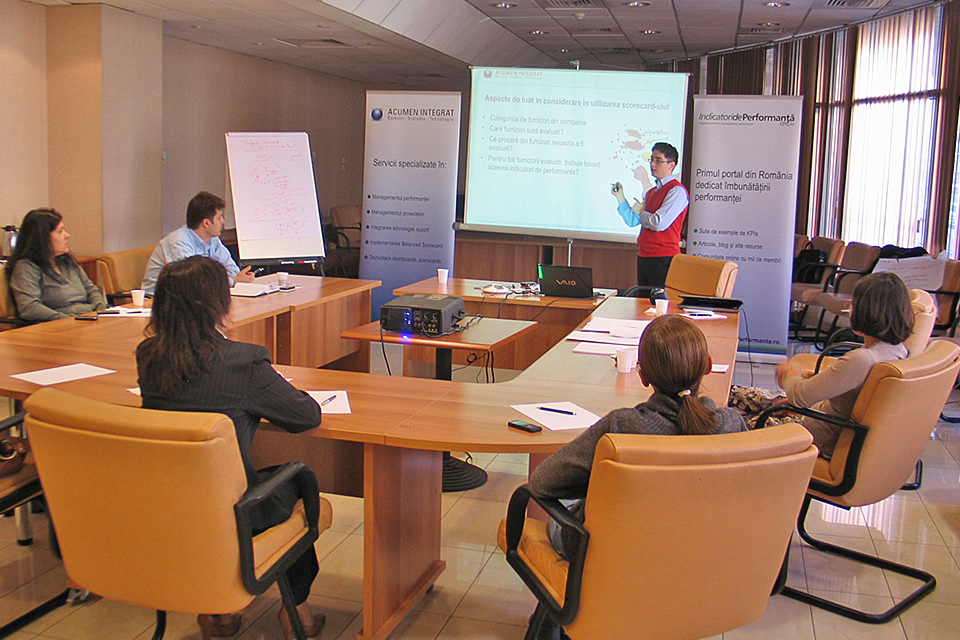
Persuasion in the workplace requires a logical structure that speaks to both reason and emotion. The Need–Satisfaction model is one of the most powerful leadership influence strategies, applied as follows:
Don’t open with slides, schedules, or budgets. Start with a sharp, relevant signal—something that makes leadership look up from their mental spreadsheets.
For example: “Last year, skill gaps in our department quietly cost us 15% of productive time.”
That sentence reframes training from “development” to “leakage.” Once leaders see the cost of inaction, training stops being optional and starts feeling strategic.
Executives filter information through their own priorities. Your job is to find that filter and speak through it.
If the Head of Operations is under pressure to cut errors by 20%, don’t lead with course content. Lead with impact: “This program targets waste points and error-prevention habits. Similar initiatives have reduced operational errors by up to 25%, directly supporting this year’s accuracy target.”
Now training isn’t a proposal—it’s a lever.
It is critical to transform the training plan from “extra expense” into an “investment tool” by stopping the sale of academic content and starting the sale of operational outcomes. Rather than describing what employees will learn, focus on how this learning will address existing financial or managerial gaps.
Present a smart roadmap that ensures minimal disruption to workflow and promises tangible impact (such as cost reduction or productivity gains). In doing so, management approval becomes a rational choice to protect organizational interests—not merely a response to a functional request.
Finally, move leadership out of spreadsheets and into a believable future.
Describe teams that collaborate smoothly, processes that no longer bleed time, and a workplace that attracts strong talent instead of exhausting it. Make the post-training reality feel tangible—almost inevitable.
The goal is simple: let leaders feel the upside before it arrives. Once that emotional picture is clear, maintaining the status quo starts to feel risky.
"The Need–Satisfaction model works because it connects executive pressure points—cost, efficiency, credibility—to a concrete training action plan. Attention opens the door; alignment keeps it open; visualization closes the deal."

In budget negotiations, one objection shows up with clockwork reliability: “The budget is tight, and technical training has to come first.”
On the surface, it sounds practical—even responsible. But beneath it sits an incomplete assumption: that productivity is built on technical skill alone. This is where smart negotiation begins—not by challenging the objection head-on, but by quietly reframing the story behind it.
Technical skills define capability. Soft skills define velocity.
An employee can be technically brilliant and still slow an entire team down through poor communication, unmanaged stress, or weak decision-making. Not because they lack knowledge, but because friction follows them into every meeting, every handoff, every deadline.
Research from Harvard University, Boston University, and the University of Michigan’s Ross School of Business makes this tangible. Employees who received structured training in behavioral skills—time management, communication, teamwork, problem-solving—saw productivity rise by 12% compared to peers who received none.
That’s not a morale boost. That’s operational lift.
Leadership’s logic is familiar: resources are constrained, and if training must happen, it should support core operations directly. Soft skills, in this view, are “nice to have”—useful, but deferrable.
It’s a rational argument. And that’s precisely why it needs a rational correction.
No serious organization succeeds on technical competence alone. Technical training is essential—but on its own, it’s incomplete.
Sustainable performance requires strong technical capabilities guided by people who can communicate clearly, solve problems under pressure, build trust, and make sound decisions. Without those skills, technical investments underperform.
Seen through this lens, soft skills aren’t an extra line item. They’re a multiplier—the force that determines whether technical investments deliver 60% of their potential or 120%.
"The most vigorous rebuttals acknowledge constraints first, then introduce data that reframes cost. When leaders see that losses from disengagement, miscommunication, and burnout quietly exceed training expenses, resistance softens—and credibility rises."

Winning approval for a training plan isn’t about delivering a polished presentation—it’s about mastering strategic value positioning. Real influence happens when learning is framed not as a current expense, but as a bridge between today’s capabilities and tomorrow’s market leadership.
Securing executive buy-in starts long before you step into the meeting room. The most successful training advocates first build an environment that’s intellectually “hungry.”
This can begin informally:
When knowledge becomes the organization’s shared currency, learning stops feeling like an initiative and becomes infrastructure. The result is an agile organization—one that adapts to market volatility without tearing itself apart at every disruption.
Investment in learning does more than improve performance—it reshapes how the organization is perceived.
In today’s labor market, top talent isn’t chasing paychecks alone. They’re looking for momentum, growth, and environments that take development seriously. When leadership approves a thoughtful training strategy, it sends a powerful signal: this is a place where careers move forward.
That signal quietly turns the organization into a talent magnet—lowering recruitment costs, improving retention, and strengthening competitiveness without additional marketing spend.
Leaders may operate with spreadsheets, but they decide with people. Trust, credibility, and emotional intelligence play a decisive role in whether a proposal is embraced or quietly shelved. When you demonstrate genuine understanding of leadership’s financial pressures—and position your training plan as a way to relieve those pressures through higher productivity—you build trust capital.
While executive decisions are justified logically, a leader’s confidence in the person presenting the plan often determines the outcome.
"Workplace influence works by drawing a clear, defensible line between cause (the training initiative) and effect (financial growth, innovation, and resilience). When leaders see that link as causal—not coincidental—support becomes the rational response."

What separates managers who follow direction from those who shape it is influence.
Mastering workplace influence skills transforms rejected proposals into strategic conversations. Securing approval for your training plan isn’t personal—it’s a professional communication discipline that requires:
Remember: leadership doesn’t reject training because it’s anti-learning. It rejects training because it hasn’t yet been convinced it’s the smartest allocation of capital.
Your role is to change that narrative.
Ready to turn your next presentation into a strategic win?
Start by identifying the single biggest performance bottleneck in your department—and tie it directly to the first course in your training roadmap.
Look for shared interests rather than resistance. Anchor your message in others’ priorities and frame training as a solution to their challenges.
Rely on trusted, external sources—global studies from organizations like Gallup or LinkedIn—and present arguments that are clean, concise, and free of logical gaps.
Neither alone is enough. Persuasion works best when it combines credibility (Ethos), logic (Logos), and emotion (Pathos) into a balanced, compelling case.
This article was prepared by trainer Manal Kamel, an ITOT certified coach.
ITOT
Help
Log In
ILLAFTrain Accredited Provider – The CPD Certification Service CPD UK
ILLAFTrain Registered Provider: UKRLP – UKPRN: 10099126
© 2026 Illaftrainoftrainers