
3th November, 2025


3th November, 2025
Can employees safely learn from mistakes without costly consequences? How many significant errors could have been avoided with proper simulation training?
Merely delivering theoretical information or static lectures is no longer sufficient for meaningful employee engagement.
A report by Training Industry revealed that 72% of companies using simulation-based training reported improved performance, while 68% noted enhanced workforce productivity.
What is simulation-based training, and why is it essential for developing competencies? What benefits does it offer, and how can it be effectively designed and applied? This article answers these key questions.
Corporate training has undergone a fundamental shift from passive knowledge transfer to active, experiential learning.
Modern programs now prioritize immersive environments where employees can safely practice in real-world scenarios, experiment freely, and learn from errors without facing real-world repercussions.
This is where simulation-based training shines—it supports different learning styles by offering hands-on, experiential learning beyond visual or auditory methods.
A key benefit of simulation training is its cost-effective way of teaching essential skills, while assessing how learners apply knowledge and make decisions in realistic settings. It provides a safe and controlled space where theory meets practice through hands-on experience.
Research from the U.S. National Library of Medicine shows that virtual simulation provides an authentic, reality-based learning experience. Its versatility makes it valuable across sectors—from healthcare and aviation to project management, client service, and military training.

Simulation training offers realistic, technology-driven learning experiences, providing a cost-effective alternative to traditional training approaches.
Several specific advantages contribute to the widespread adoption of this training across various industries.
Simulation training replicates realistic work environments and scenarios, providing a valuable opportunity for hands-on practice.
This makes the training more relevant, enabling learners to engage in real-life scenarios that reflect the challenges they are likely to encounter in their jobs.
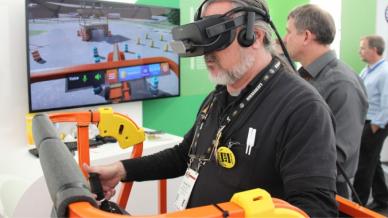
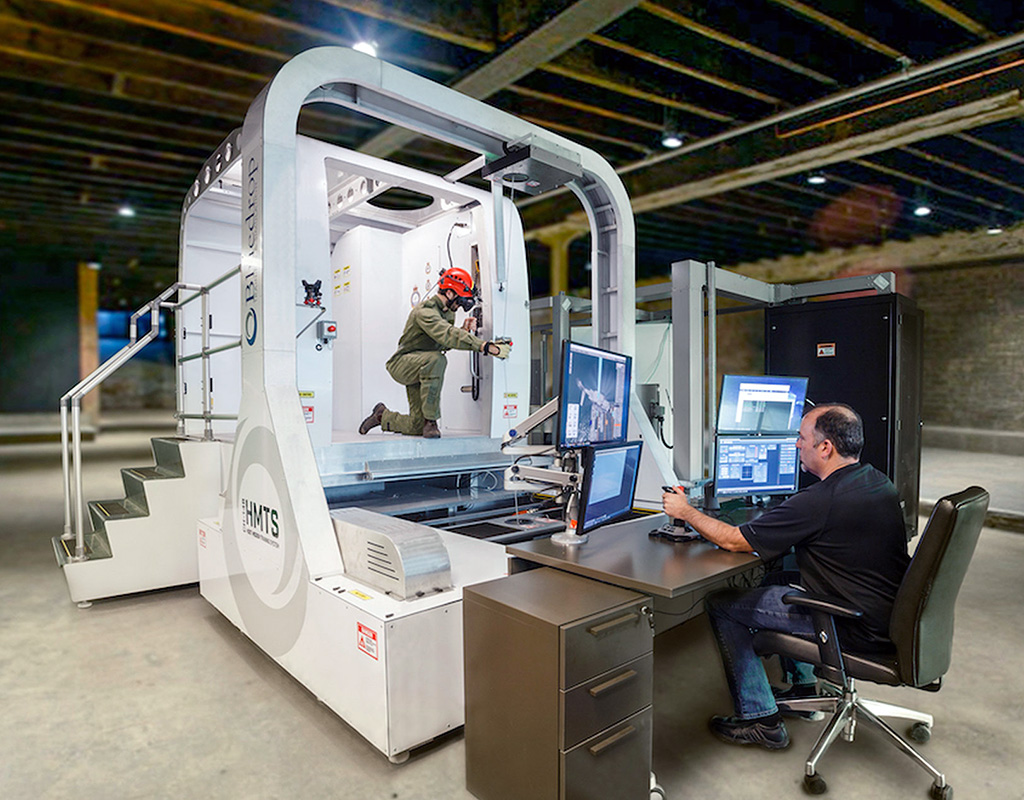
The integration of technologies such as virtual reality (VR), augmented reality (AR), and advanced computer simulations has significantly enhanced learning and development programs. It creates immersive environments that deliver a level of realism traditional training often lacks.
Simulations provide instant feedback, allowing learners to see the results of their actions in real-time.
This immediate response helps them grasp the impact of their decisions, enhancing the learning process.
The hands-on, experiential nature of simulation training enhances knowledge retention.
Information gained through hands-on training scenarios tends to be retained longer than knowledge acquired through theoretical learning.
In high-risk industries, such as aviation, healthcare, and defense, this type of training provides a safe environment for participants to practice without real-world threats.
This training method enables the tracking and measurement of trainee outcomes through performance metrics.
Training institutions can leverage this data to monitor progress, identify areas for improvement, and design customized learning content tailored to individual needs.
Virtual simulation not only reduces travel expenses but also enhances learning and minimizes potential errors on the job.
The quicker completion of training contributes to boosting trainees' productivity and rapidly developing their competencies, thereby increasing long-term return on investment.
Simulation comes in various forms, each suited to specific learning goals and task requirements. The choice depends on factors such as learning objectives, industry, task complexity, and the availability of technology.
Effective programs often combine multiple simulation types to create a well-rounded learning experience.
These are dynamic, real-time scenarios that replicate real work situations. Learners actively make decisions and respond to evolving challenges, commonly used in fields such as emergency response, military training, and business management.
They recreate realistic scenarios where participants interact with virtual environments—ranging from simple computer-based exercises to advanced 3D simulations.
They are commonly used in healthcare, aviation, and manufacturing training.
They create fully immersive environments through virtual reality technology, allowing learners to experience scenarios as if they were physically present.
They are commonly used in healthcare and aviation for complex processes.
They overlay digital information onto the real-world environment, enhancing participants’ perception of surroundings.
This approach is valuable for tasks that require real-time data integration.
It is used in maintenance and repair simulations, providing technicians with on-the-job guidance and support.
Learners are presented with specific situations and challenges to make decisions and solve problems. They are used in developing decision-making and crisis management skills.
Engage participants in specific roles within a scenario to help practice communication and interpersonal interactions.
They are used in interpersonal skills training, such as client service or negotiation.
Designed as interactive games with learning purposes, often incorporating elements of competition, collaboration, and problem-solving.
They are used to make learning enjoyable and effective.
They combine multiple types of simulations—blending theoretical and practical elements—to create a comprehensive and integrated training experience.
This type of virtual simulation relies on discussing scenarios using tools, such as maps or diagrams, without actual execution.
Tabletop exercises are used to train crisis and emergency response teams in planning and decision-making.
Practical simulation training requires a structured approach—from defining objectives to conducting evaluation.
Designing effective simulation training starts by defining clear learning objectives. Identify the skills and competencies to develop, link them to organizational goals, and determine the target audience.
This ensures the simulations are tailored to both the learners’ needs and the intended outcomes.
At this stage, training scenarios are developed based on the previously defined objectives and collected information.
These scenarios should be clear, coherent, and aligned with multiple learning goals to ensure a realistic learning experience that helps trainees retain knowledge and apply it in practice.
According to Magnus Ove, Laerdal’s Vice President of Physical Platforms, “Studies show that if the environment in which the learner is practicing does not even come close to imitating reality, then the learner will not fully engage in the learning exercise. Learning is compromised when not engaged.”
After designing the training scenarios, the next step is to refine the details based on the chosen simulation method.
For instance, healthcare training may use lifelike mannequins with realistic features, such as veins, skin textures, and age characteristics.
However, avoid overwhelming trainees with excessive details. Keeping the learning experience clear and straightforward enhances training effectiveness.
The training program should include clear criteria for assessing performance, using evaluations, surveys, and feedback loops to identify areas for improvement.
This approach encourages continuous growth and motivates learners to progress in their development journey.
The evolution of this type of training has helped expand its applications and provide valuable learning experiences across industries.
Some of the examples include:
AI simulation involves using artificial intelligence algorithms to create virtual models that replicate real-world systems or processes, or to enhance their performance.
AI simulation replicates real-world systems in a virtual setting, enabling machines to learn and improve safely. It offers a low-risk, high-value approach to testing and training intelligent systems in fields such as traffic management, manufacturing, and behavioural modelling.
AI not only automates simulations but also improves them through feedback and synthetic data, enabling the testing of rare or complex scenarios.
Integrating machine learning with simulation tools enables:
AI transforms simulation from a static analytical tool into a dynamic, adaptive, and ever-evolving process.
Simulation-based training goes beyond technology—it's a learning philosophy that emphasizes experience over theory.
By immersing learners in realistic scenarios, it transforms how skills are developed, giving organizations a dynamic and safe way to strengthen workforce capabilities.
With AI advancements, the future of simulation grows even more promising—especially when paired with analytics, adaptive learning, and personalised training.
Ready to explore simulation-based learning? Share your insights in the comments.
This article was prepared by coach Ahmad Al Khatib, an ITOT certified coach.
ITOT
Help
Log In

ILLAFTrain Accredited Provider – The CPD Certification Service CPD UK
ILLAFTrain Registered Provider: UKRLP – UKPRN: 10099126
© 2026 Illaftrainoftrainers